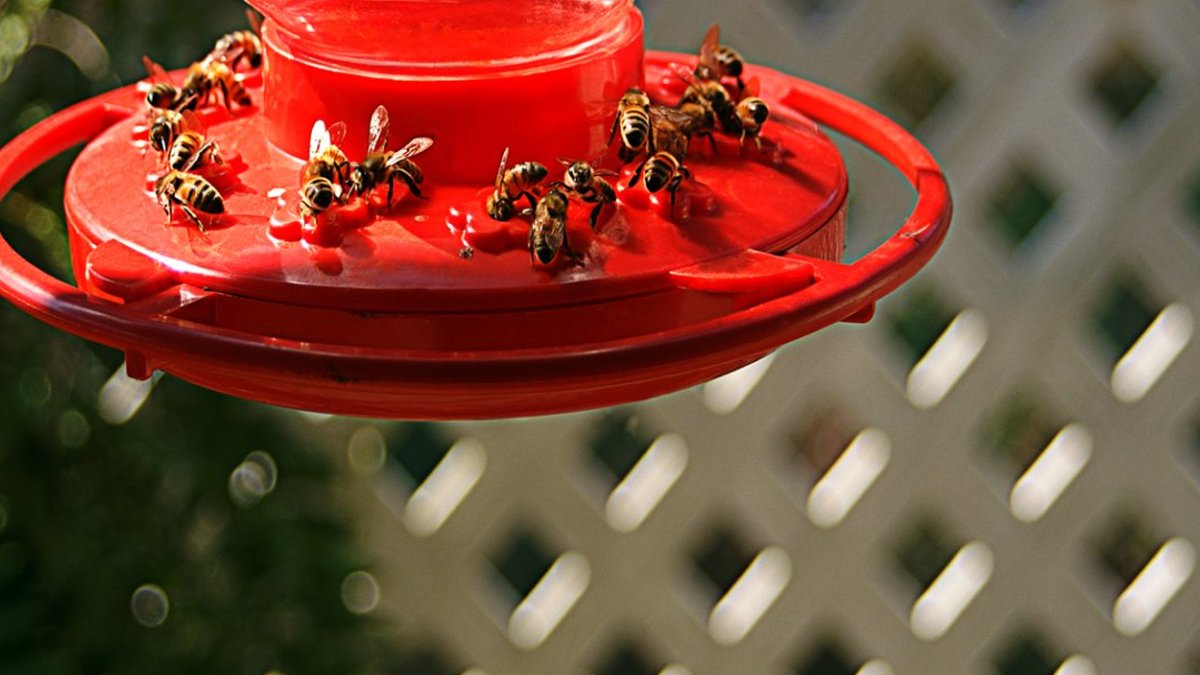
Attracting hummingbirds to a yard is a common goal for bird enthusiasts, yet the high-calorie sugar water meant for these birds often draws the wrong kind of crowd. While the dozen or so species of hummingbirds found in North America gravitate toward colorful garden flowers such as lantana, bee balm, foxglove, salvias, lupine, flowering tobacco, petunias, and zinnias, they are equally tempted by the sugary nectar in feeders. Unfortunately, this food source also appeals to bees, wasps, and ants. These insects are essential pollinators, but they become pests when they swarm a hummingbird feeder. An abundance of insects can contaminate the nectar and intimidate the birds. A swarm of bees on a feeder can lead to overcrowding, leaving little room for the hummingbirds and forcing them to search for food elsewhere.
Selecting the Right Equipment
The design of the feeder plays a major role in keeping insects away. If bees and other insects are rampant in the yard, saucer-style feeders are generally recommended because the nectar level sits too low for insects to reach, while hummingbirds can easily access it with their long tongues. These models also drip less than the inverted bottle designs, which reduces the sticky mess that attracts ants. To further prevent leaks that draw pests, ensure the seal between the reservoir and feeding ports is properly aligned and tight, and take care not to overfill the unit to the point that it leaks.
There are approximately 4,000 varieties of bees in North America, many of which seek out nectar, so adding bee guards can be a necessary defense. These attachments fit into the feeding ports to create a barrier that blocks insects. Specifically, they create enough space between the food source and the access port to keep bees from reaching the “juice” while allowing the hummingbirds to drink at will. Many of these are small, often yellow, plastic pieces that are easily replaceable when they wear out. Color is another factor; hummingbirds are highly attracted to red, but bees and wasps do not share this preference and are often drawn to yellow. For this reason, red feeders are preferable. There is no need to dye the nectar red; the additive offers no nutritional value and can actually harm the birds.
Strategic Placement and Nectar Adjustments
Relocating the feeder can confuse insects, which tend to rely on location memory. Insects prefer convenience and are less likely to search out a new location, so moving the unit just a few feet may cause bees to lose track of it. If moving the feeder isn’t practical, taking it down for a couple of days might encourage the swarm to move on. Don’t move the feeder too frequently, however, or the birds might stop visiting as well. Additionally, moving the feeder to a partially shaded area can make it less alluring to bees, who prefer to feed in sunlight, while also slowing fermentation and leaks.
Related: Home Depot Discounts Power Tools Heavily
Adjusting the sweetness of the solution is another effective tactic. Bees love sugar and will choose the sweetest flowers and nectar available. While bees and wasps prefer a water-to-sugar ratio of 3:1 or 4:1, diluting the ratio in the feeder to 5:1 will still attract the little birds but might send the insects in search of sweeter food elsewhere. Providing an alternative food source can also divert attention away from the main feeder. Planting a pollinator garden with a mixture of perennials and annuals that have staggered bloom times offers bees a smorgasbord of floral selections. If planting flowers is not an option, add a bee-specific feeder or a shallow bowl with a stronger sugar solution than the 5:1 ratio satisfactory to hummingbirds. Start by placing this decoy near the hummingbird feeder and gradually move it 5 to 6 feet away.
Regularly cleaning hummingbird feeders minimizes spilled nectar that attracts bees, wasps, ants, and other insects. It also reduces the likelihood of the nectar spoiling and harming the hummingbirds. When maintaining the setup, never use harmful substances like pesticides near the feeders, as bees are important pollinators that really shouldn’t be killed. Similarly, avoid using oil, spray, or petroleum jelly on the feeder, as these sticky substances can impair a hummingbird’s ability to fly if they contact the wings or prevent the bird from opening its mouth if they stick to the beak. Tape should also be avoided entirely to prevent the birds from getting stuck to the adhesive.
For the homeowner, this creates a practical challenge of balancing wildlife interests. You want to support the local ecosystem without turning your feeding station into a battleground where the smaller birds get pushed out by aggressive swarms.