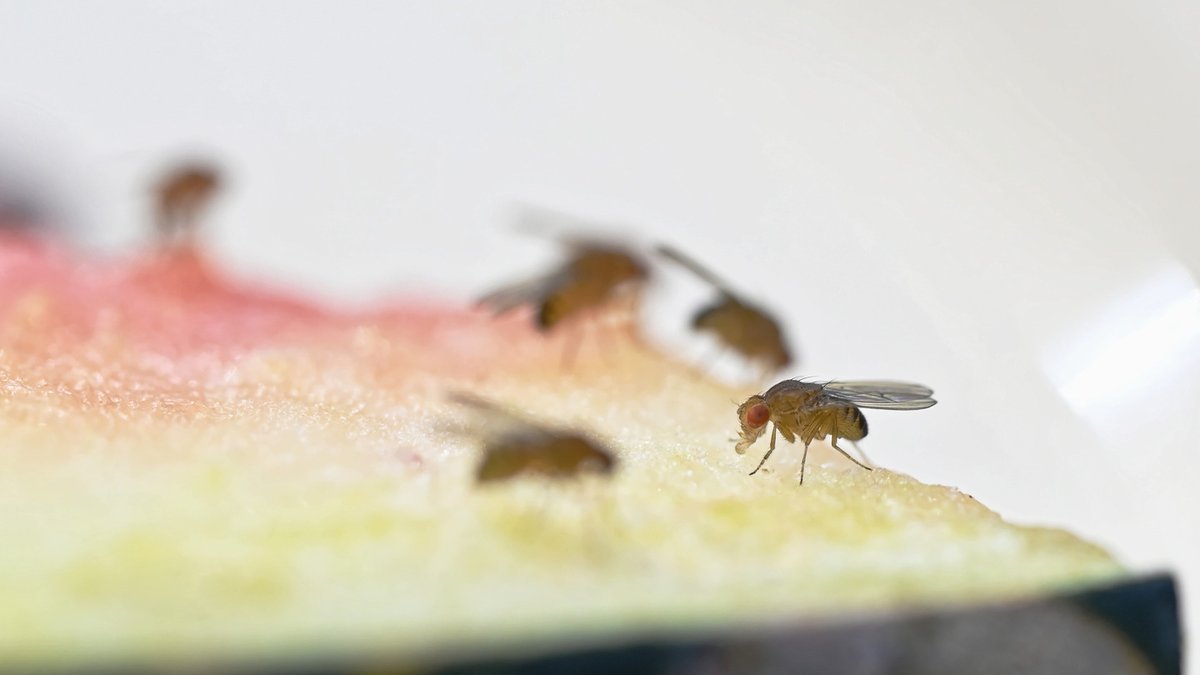
Tiny gnats and fruit flies can turn a kitchen into a swarm overnight. They breed in drains, garbage, and overripe fruit, making them hard to ignore. These insects are drawn to moisture and fermenting organic matter, which provides both food and ideal breeding conditions. A TikTok user known as the1776wife shared a simple way to trap them using old pickle jars, a screwdriver, and a few household ingredients, offering a low-cost solution to a persistent problem.
The trap relies on scent and surface tension
The method works by luring flies with the smell of vinegar and sugar, which mimics the scent of decaying fruit—a primary attractant for these pests. Once inside the jar, the insects encounter the liquid bait, where a few drops of dish soap break the surface tension. Normally, the surface tension of water or vinegar would allow small insects to land and take off without issue. However, dish soap contains surfactants that reduce this tension, causing the flies to sink and drown upon contact. The trap can be made with or without a lid—plastic wrap and a rubber band work just as well, though the lid method is often preferred for its durability and ease of reuse.
To start, wash the pickle jar thoroughly to remove any lingering odors, as residual scents from pickles or other foods can interfere with the bait’s effectiveness. If using a metal lid, poke several small holes with a screwdriver and hammer, ensuring they are evenly spaced to allow flies to enter while minimizing escape routes. Smaller holes make it harder for flies to handle back out, increasing the trap’s efficiency. For jars without lids, stretch plastic wrap tightly over the opening, secure it with a rubber band, and poke holes with a toothpick. The holes should be just large enough for flies to enter but not so big that they can easily exit.
For bait, mix a cup of sugar with equal parts hot water and white vinegar. The sugar dissolves more quickly in hot water, creating a concentrated solution that enhances the vinegar’s scent. Add one or two drops of dish soap and stir gently to avoid creating excessive suds, which could deter flies. The TikTok user noted that apple cider vinegar can also be used, a tip backed by Michigan State University’s garden extension, as its stronger aroma is often more effective at attracting fruit flies. Once prepared, place the jar on the counter where flies are most active, such as near fruit bowls, trash bins, or compost containers.
Related: Scrap wood becomes elegant wall art
Traps alone won’t solve the problem
While these DIY traps can reduce the number of flies, they don’t address the source. Fruit flies thrive on decaying organic matter, which provides both nourishment for adults and a breeding ground for larvae. Even if traps capture dozens of flies, new ones will continue to emerge if the underlying attractants remain. Storing produce in the fridge, particularly during warmer months when fruit flies are most active, can help. Many fruits and vegetables release ethylene gas as they ripen, which accelerates spoilage and attracts pests. Discarding rotten fruits and vegetables immediately is critical, as even small amounts of decay can sustain a population. Additionally, cleaning drains with boiling water helps eliminate organic buildup, which can serve as a hidden breeding site. Trash bins and compost containers should also be kept clean and sealed, as lingering odors and residue can draw flies from neighboring areas.
The TikTok user has reused the same pickle jars for years, even before adopting a non-toxic household. She joked about losing lids but said the traps remain effective regardless, highlighting their simplicity and reliability. The method is cheap, reusable, and requires no special tools—just a jar, vinegar, and a little patience. Unlike commercial traps, which often contain synthetic attractants or pesticides, this approach relies on natural ingredients, making it safer for homes with children or pets.
Prevention, though, is the only way to keep the flies from coming back. A single overripe banana left on the counter can attract dozens of them in hours, as the fruit’s fermenting sugars release volatile compounds that flies detect. Regular cleaning and proper food storage make the biggest difference in breaking the cycle. Wiping down counters with a vinegar solution can help neutralize odors, while storing produce in airtight containers limits exposure. For those with compost bins, keeping them outdoors and away from entry points can reduce indoor infestations. By combining traps with proactive cleaning habits, homeowners can significantly reduce fruit fly and gnat populations without resorting to harsh chemicals.