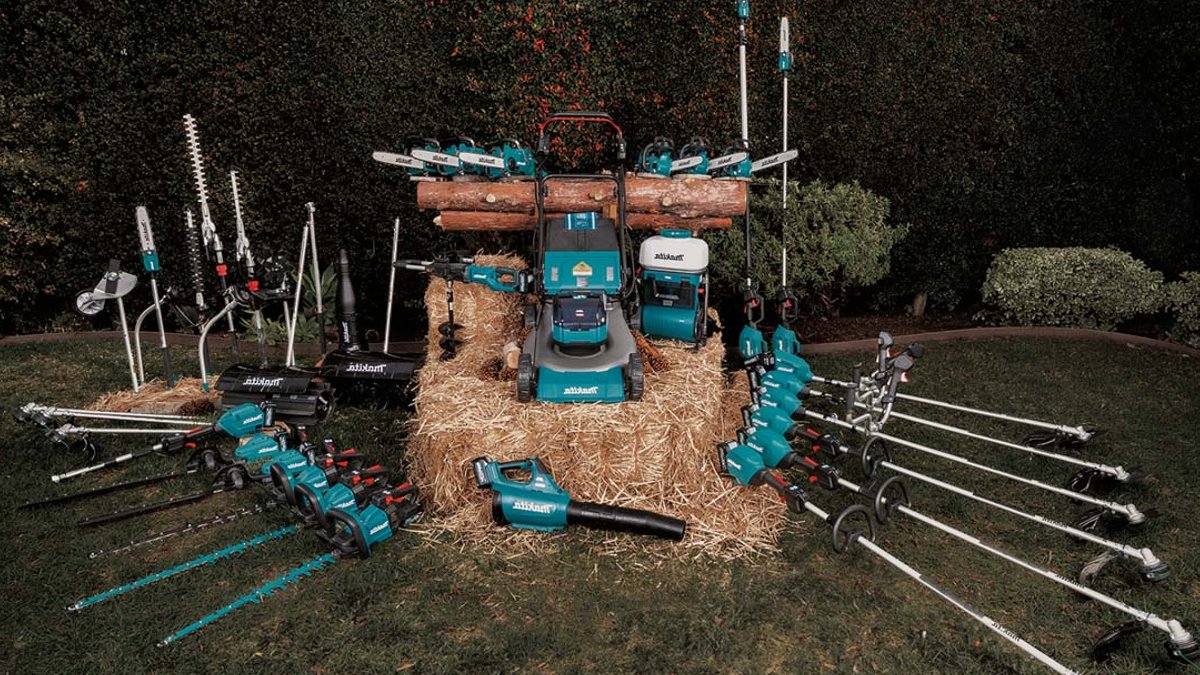
The outdoor power equipment aisle at home improvement stores has changed dramatically in recent years, with cordless tools now a dominant presence. This shift is particularly evident in the commercial sector, where landscaping and lawn care professionals face difficult choices when selecting equipment that balances performance, runtime, and cost. As gas-powered models face increasing scrutiny for emissions and maintenance, battery platforms have become the focus of development efforts aimed at replacing small engines entirely. Makita, a company with a long history in motor engineering, has positioned its 40V max XGT system as a leading solution for professionals looking to make this transition.
Building on Decades of Experience
Makita’s history provides a foundation for its current offerings in outdoor power equipment. The company has 110 years of motor engineering experience and 45 years of battery innovation within the cordless sector. When applied specifically to outdoor power, the firm brings 95 years of expertise with chainsaws and gas equipment. This background informs the design of the XGT platform, which was created to specifically replace equipment with small gas engines. The system operates at 40V but can reach 80V through an X2 configuration that doubles the voltage. It also supports sequential battery operation to maximize performance during demanding tasks.
The XGT system currently includes more than 170 products, a catalog that spans handheld tools and larger equipment. This breadth allows crews to build a complete operation on a single power source. Unlike some competitors that offer multiple distinct systems, Makita focuses on a unified approach to battery power in the outdoor space. This strategy simplifies inventory for professional operations and reduces the need to maintain different battery types for different tools. The platform is designed to grow alongside the needs of landscaping crews as they expand their operations or take on more complex projects.
Related Post: Kobalt launches tabless 24V batteries with higher power
Managing the logistics of battery power presents a significant operational challenge for professional crews. The charging infrastructure must support high volumes of batteries to ensure tools remain operational throughout a workday. Makita addresses this through a series of multi-port charging solutions designed for fleet operations. The BCC01 is an eight-port charger compatible with the highest-capacity XGT batteries. It can be connected in a daisy-chain configuration, allowing up to four units to run from a single 15-amp outlet. This setup can charge up to 32 batteries simultaneously, an essential feature for large crews running multiple machines at once.
For smaller setups and owner-operators, the BCC02 offers a 12-port option that handles 2.5Ah and 4.0Ah batteries. This flexibility allows users to charge smaller packs typically found in handheld products without occupying the full capacity of larger chargers. The system uses electronic controllers to charge four batteries at a time and automatically switches to the next bank once the first group is complete. This automation reduces the time workers spend managing battery swaps and helps maintain workflow continuity.
Charging in the field requires a different approach than stationary shop setups. The ConnectX system provides mobile power by using large capacity batteries to charge smaller XGT packs on site. The 1200Wh backpack battery supports up to seven XGT batteries, allowing crews to cycle packs and reduce the total number of units they must carry on a truck or trailer. This capability is particularly useful for long jobs or remote locations where access to power outlets is limited. The ability to recharge batteries on location extends the effective runtime of the equipment and reduces the logistical burden of returning to base.
OEM Adoption of the XGT Motor Expands Battery Power to Traditional Gas Tools
Makita is extending the XGT power system to equipment produced by other manufacturers. The newly introduced XGT motor lets original equipment manufacturers replace 25cc to 50cc gas engines with a brushless motor. This approach gives OEMs a path to electrify tools that have traditionally relied on small gasoline powerplants. The motor integrates with Makita’s existing XGT battery ecosystem.
Related Post: Honda Unveils New 58V Commercial Power Tools
New Technology and Tools
Advancements in battery technology have driven the performance of cordless tools closer to their gas-powered predecessors. The introduction of tabless High-Power batteries represents a significant step forward in this area. By reducing electrical resistance within the battery pack, tabless technology allows cells to deliver more energy and charge faster while mitigating the risk of overheating. The tabless 8.0Ah High-Power battery, used in select XGT tools, provides up to 35% more power than the standard 8.0Ah cell. This increase in output helps close the gap in high-demand applications like clearing debris or cutting dense timber.
Makita has released several new tools in the XGT lineup designed to demonstrate the capabilities of this system. The GBU04 backpack blower offers performance comparable to a 65cc gas model, delivering up to 32 Newtons of blowing force. At just 19.4 pounds with batteries installed, it claims the lowest weight in its category. This reduction in weight improves operator comfort during extended use and reduces fatigue. The GCU08 20-inch chainsaw cuts up to 25% faster than a 50cc gas model, offering three speed modes to optimize performance and runtime based on the specific task. The quieter operation of the cordless unit also allows for better communication among crew members.
Makita is preparing the GCU10 top-handle chainsaw, a tool designed for arborists. It provides 35cc equivalent power, matching the output of popular gas models while remaining lighter and quieter. The emphasis on power, weight, and noise levels addresses the primary complaints professionals have about traditional gas equipment. By targeting these specific pain points, Makita aims to make the transition to battery power more attractive for established crews.