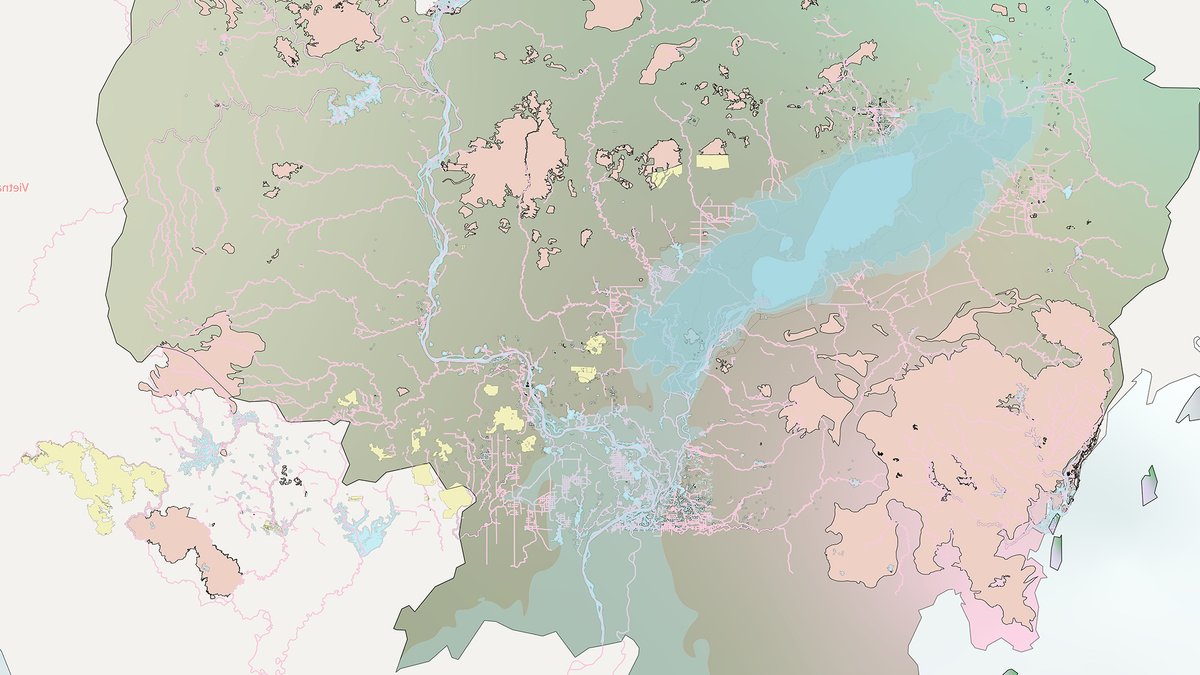
The Future100 2026 program has recognized Kimhour Lor, an undergraduate student at the University of Houston, for her work on architectural resilience. Her thesis, titled Return of a River: Reimagining Flood Resilience in Phnom Penh, investigates how urban environments can adapt to shifting hydrological patterns during a period of rapid development and environmental change.
The project focuses on Phnom Penh, a city located at the intersection of the Mekong, Tonle Sap, and Bassac Rivers. Lor proposes a framework that incorporates adaptive wetlands and flexible structures. These elements are designed to accommodate seasonal water level fluctuations instead of attempting to block them through traditional engineering.
By blending historical water management traditions with modern environmental data, the design seeks to mitigate the risks associated with climate instability. Buildings should be viewed as components of a living ecosystem. Stilted villages and modular systems form the core of this proposal, which aims to provide a functional alternative to current urban expansion practices that often prioritize land reclamation over natural drainage.
Related: Glasgow Architects Balance Conservation and Community Needs
Modern architecture frequently treats the built environment as a static entity. The reality of urban life in flood-prone regions demands a more fluid strategy.
By shifting the focus from rigid containment to integration, designers can create infrastructure that absorbs the pressure of rising water levels rather than resisting them. This transition shows how planners address the permanence of structures in an era defined by ecological uncertainty.
Dalia Munenzon, an assistant professor in the Department of Architecture and Design at the University of Houston, nominated Lor for the honor. She noted that the student combines rigorous analysis with an intuitive, poetic sensibility. This methodology relies on a mix of cultural research, hydrological studies, and narrative-driven illustrations to communicate the proposal.
Related: Top Deck Boxes for Your Yard
The thesis challenges the long-term viability of current modernization trends in Southeast Asia. It argues that resilience is a cultural requirement. The project serves as a point of reference for how cities might handle the collision of urban growth and climate change. The design process began with an effort to understand the local environment and the memory of the communities living along the riverbanks.
The final documentation emphasizes the importance of maintaining a balance between human habitation and the natural movement of the river.