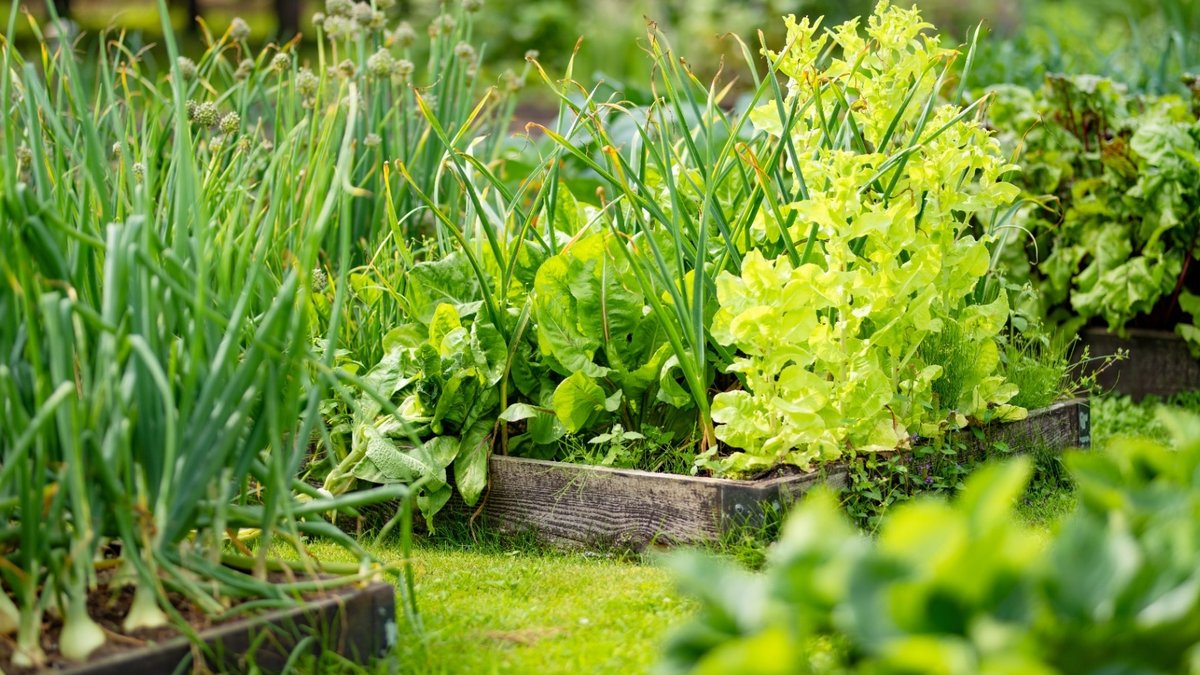
A kitchen garden doesn’t need full sun to be productive. Some crops, such as tomatoes and courgettes, thrive in direct sunlight, but many root crops, leafy vegetables, and herbs can perform well with less. Partial shade, typically defined as 3-6 hours of direct sunlight a day, can be optimal for some crops, helping them avoid intense afternoon sun.
One crop that prefers partial shade is spinach, which is packed with vitamins K, A, and C. It’s a superb choice for a partially shaded garden, as it prefers cool conditions and can be harvested continually by picking the outer leaves. Sowing spinach in small batches can extend the harvest period, as new shoots will keep popping up across the weeks.
Partial Shade Crops
A much-beloved favourite since the Victorian era, Spinach ‘Matador’ is celebrated for its remarkable vigour and abundant harvests of deeply crinkled, emerald-green leaves. Another crop that can tolerate partial shade is Swiss chard, which has brightly colourful stems and is delicious in summer recipes. Planting Swiss chard in fertile, moisture-retentive soil and picking the outer leaves can keep the plant flourishing.
Radishes are also a great choice for partial shade, as they are fast-growing and don’t require full sun to produce. Sowing radish seeds directly into finely prepared soil and thinning seedlings as needed can give a steady supply. Lettuce leaves also prefer partial shade, as they can become tender and delicious when protected from the hottest afternoon sun.
Lettuce can be sown successionally through spring and summer to keep the garden and kitchen in abundant supply. Bolt-resistant varieties are the best choice, as high summer temperatures can cause some lettuces to bolt. Keeping the soil consistently moist and harvesting regularly can extend the harvest period.
Beetroot is another crop that can tolerate partial shade, although the roots may grow more slowly without full sunlight. Sowing beetroot seeds directly into well-drained and fertile soil and keeping the seedlings watered can produce tender and young roots. The foliage can also be used like spinach, adding to the crop’s versatility.
Carrots can also be grown in partial shade, but the soil is the real dealbreaker – it needs to be loose and stone-free for the roots to develop properly. Selecting shorter or early varieties and sowing them directly into the ground can produce excellent results. Peas are another brilliant choice for a kitchen garden with partial shade, as they need protection from the intensity of the weather during the hottest part of the year.
When growing peas, plant supports like trellises or netting are essential, and regular watering is important, especially while they are flowering. Continuous harvesting can encourage the peas to keep cropping, making them a perfect vegetable for summer recipes. Kale plants are also adaptable and resilient, perfect for extending harvests into winter, and they don’t need as much sun as other crops.
Planting kale in fertile soil with adequate moisture and harvesting throughout the growing season can keep the crop growing. Sorrel is another herb that prefers partial shade and is perennial, making it a great addition to the kitchen garden. Harvesting young leaves for the best flavour and removing flower stems can stimulate more foliage, adding to the crop’s value.
Spring onions can tolerate a degree of shade and are brilliant for filling gaps between slower-growing vegetables. Sowing spring onions directly into the soil in short rows and keeping the soil consistently moist can produce a succession of harvests. To make the most of partial shade in the kitchen garden, improving the soil with organic matter and keeping crops well-watered is essential, especially during drier spells.
Harvesting and Maintenance
Sorrel is another crop that benefits from regular harvesting, as it stimulates the plant to produce more foliage. Removing flower stems can also help encourage new growth, making it a great addition to a partially shaded garden. Sorrel’s perennial nature means it can be enjoyed for years to come, making it a valuable crop for any kitchen garden.