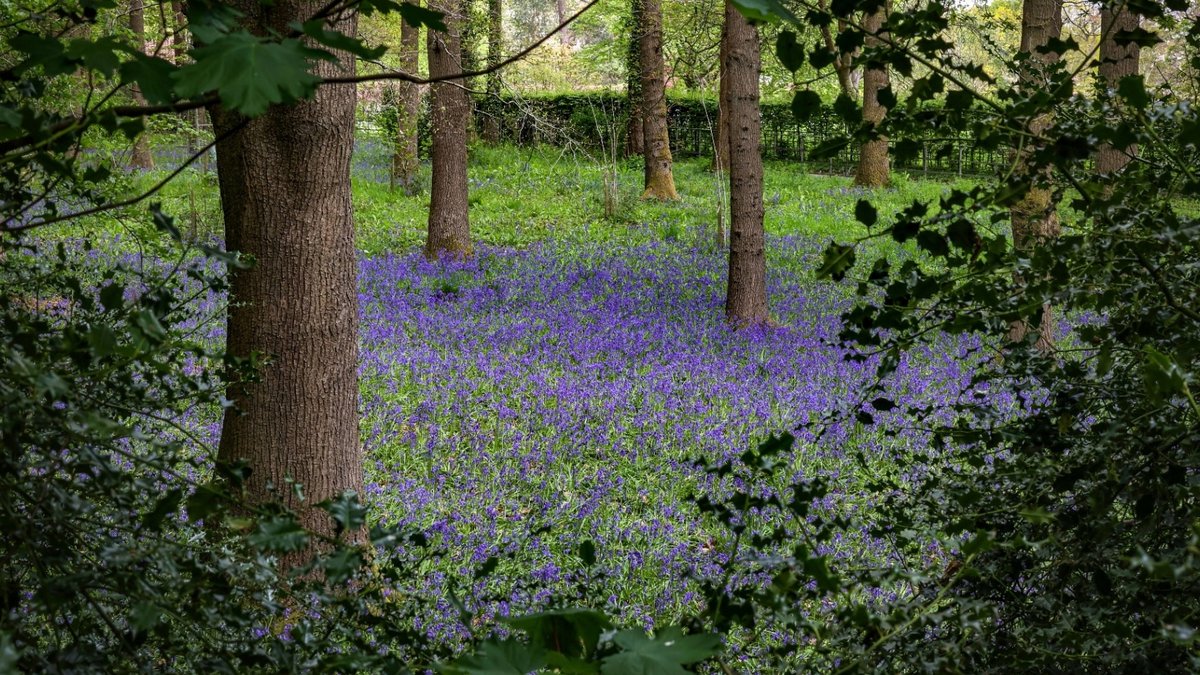
A shady garden does not mean sacrificing color. Many bulbs flourish in low light, producing striking blooms from winter through autumn, with some even spreading on their own. The secret lies in selecting the right types that perform well under trees, on north-facing walls, or in dense foliage where sunlight is scarce.
The Siberian squill (Scilla siberica) provides one of the brightest early-season displays. Its nodding blue bells appear in March and April, reaching heights of 10–20 centimeters, and has earned the RHS Award of Garden Merit for its reliability. Plant 25 bulbs together in autumn, ensuring the soil remains moist but not waterlogged. They naturalize easily under hedges or in pots on a north-facing windowsill, with leaves tidying up neatly after flowering.
For a contrasting blue hue, Glory of the Snow (Chionodoxa forbesii) emerges in early spring, often before snow melts in its native Turkey. Its star-shaped flowers feature crisp white centers that fade to sky-blue, and the plant spreads effortlessly as ants carry away its seeds, planting them across the garden. Bulbs should be placed two to three times their depth in well-drained soil beneath deciduous trees.
Dry shade presents a greater challenge, but the Balkan anemone (Anemone blanda) excels in such conditions. Its daisy-like blooms in blue, white, or pink appear in early spring, eventually forming a carpet over time. The knobbly tubers may look unpromising, but soaking them for a few hours before planting—5 centimeters deep—ensures they swell properly. Scatter them generously, as they perform best in large clusters.
Woodland edges suit the wild daffodil (Narcissus pseudonarcissus), also called Lent lily, with its delicate pale cream petals and deeper yellow trumpets. Wordsworth praised its nodding charm, and it spreads reliably if left undisturbed. Plant bulbs 6–8 centimeters deep in moist but not soggy soil, understanding that smaller wild varieties may take years to flower fully.
Read Also: How to take salvia cuttings before the frost
Brighten patios with compact shade bulbs
Pots bring color to shady patios or doorsteps. The compact jonquil ‘Sailboat’ produces scented creamy-white blooms in March and April, fading to pale lemon. Its soft tones stand out in low light, making it ideal for evening displays. Plant bulbs 10 centimeters deep and apart in gritty, well-drained soil, and leave them undisturbed year after year.
Its buttercup-yellow, lemon-scented flowers appear in April, naturalizing well in grass or under deciduous trees. Plant bulbs 10–15 centimeters deep in free-draining soil, and avoid deep gloom—dappled light suits them best. Unlike showy hybrids, this species requires no deadheading; seedheads can ripen naturally to expand the patch over time.
They bloom before taller plants leaf out, and their reflexed petals resemble cyclamen. This variety has won a RHS Award of Garden Merit and naturalizes beautifully in undisturbed spots, reaching just 15 centimeters tall. Plant bulbs 10 centimeters deep in humus-rich soil, and avoid disturbing them once established.
Golden winter blooms and late-season cyclamen
Shade-loving bulbs extend beyond spring. The winter aconite (Eranthis hyemalis) blooms in February, its golden-yellow chalice-shaped flowers backed by green ruffs. It naturalizes readily, creating carpets over time. Plant bulbs while still green or as potted specimens, and allow foliage to die back naturally after flowering to ensure next year’s display.
For late-season interest, cyclamen (Cyclamen coum) thrives in dry shade, its marbled leaves and tiny pink flowers emerging in spring. Tubers should sit just 2.5 centimeters deep in humus-rich soil, and they self-seed with ant assistance. Top-dress with leaf mold after leaves fade, and prevent waterlogging during summer dormancy.
Read Also: Birdhouses Offer Lifeline to Declining Garden Bird Populations
English bluebells (Hyacinthoides non-scripta) transform woodland floors in April with their iridescent blue blooms and honeyed fragrance. Cultivated stock performs best, wild-collected bulbs may not adapt as well.
Woodland staples for naturalizing drifts of color
The common snowdrop (Galanthus nivalis) remains the most dependable choice for drifts of white in early spring. Affordable in quantity, it thrives in partial shade under trees. Plant bulbs 5–8 centimeters deep in humus-rich soil in autumn, where they will naturalize over time.
A long-handled bulb planter, such as those from Spear & Jackson, simplifies planting, especially for deeper bulbs. Smaller tools work for diminutive varieties, but the right equipment reduces effort and prevents strain.
The snake’s head fritillary (Fritillaria meleagris) stands out with its striking, checkered purple-and-white bell-shaped flowers that dangle from slender stems in April and May. Once common in damp meadows, this bulb now thrives as a garden rarity, ideal for moist, shady spots where other plants struggle, such as woodland edges, lawns under fruit trees, or borders that stay damp through summer. Its delicate blooms, reaching 20–30 centimeters tall, require gentle handling during planting, as the bulbs bruise easily. Plant them 10 centimeters deep and 10 centimeters apart in soil rich with organic matter, ensuring consistent moisture without waterlogging.