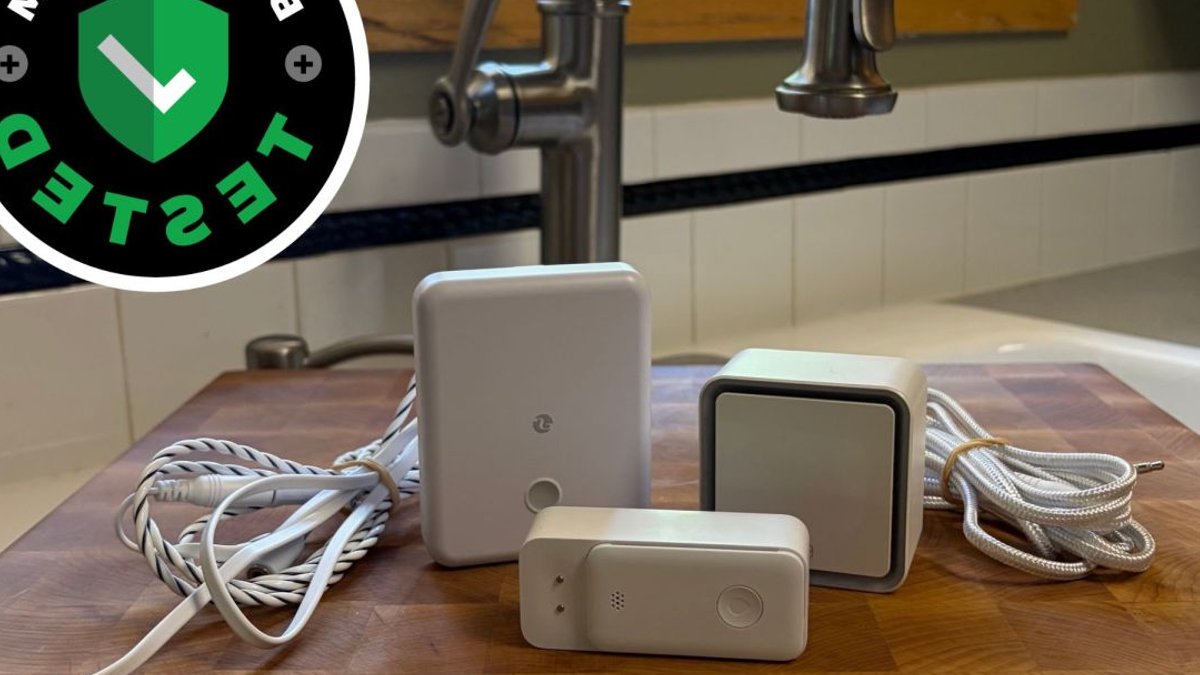
Homeowners facing costly water damage are increasingly turning to a water leak detector as a preventative tool, especially after reports that over 2.5 million residences experience serious plumbing failures each year.
What the testing revealed
After weeks of real‑world evaluation, the Shelly Flood Gen4 emerged as the top performer, despite its price hovering near the lower end of the market. The unit runs on four AA cells, delivers a 65‑decibel audible alarm, and pushes alerts to a smartphone app.
Its distinctive feature is a 2‑meter sensing cable that monitors moisture along its entire length, allowing the main hub to sit above floor level while the cable spans potential drip zones.
Installation proved straightforward: insert batteries, attach the hub with supplied 3M tabs, and unfurl the cable where water might accumulate. Battery alerts appear early.
Related: Fire Pits Now Up to 40 Percent Off
One limitation noted was the modest alarm volume. At 65 decibels, the sound may not travel to upper stories quickly, making the app notification the primary warning method. Battery health is signaled when power drops below 20 percent, prompting a replacement before reliability degrades.
Comparing other popular models
The SwitchBot model provides an 80‑decibel alarm and offers app notifications and emails. Its rating was 4.5/5.
YoLink’s sensor and hub kit uses a wall outlet for power and includes two AAA batteries for the sensors. It offers app notifications, texts, and emails, and received a rating of 4.3/5.
Kidde’s 60WLDR‑W combines leak detection with freeze alerts, sounding at 95 decibels. It operates on two AA batteries and received a rating of 4.5/5.
Other tested units include the Basement Watchdog alarm at 100 decibels, the Govee Wi‑Fi sensor with a 105‑decibel siren, and the Eve Water Guard, which draws power from a wall outlet and emits an 85‑decibel tone. Each offers a mix of app notifications and varying alarm strengths, catering to different installation scenarios.
Related: Thrifted Drawer Knobs Give Faux Plants New Style
When assessing value, the Shelly Flood Gen4 scored the highest across ease of use, reliability, functionality, and cost efficiency, earning a perfect five‑point rating for value. Its combination of a long sensing cable, dual indoor/outdoor modes, and battery operation distinguishes it from models that rely on a single point sensor.
From a broader perspective, the market’s shift toward affordable, feature‑rich detectors mirrors earlier trends in home security where low‑cost devices began offering cloud connectivity and mobile alerts. The current lineup shows that even budget‑friendly options can now provide full coverage without sacrificing core performance.
Consumers should match device capabilities with their specific risk profile. Those with basements prone to flooding may prioritize louder alarms and waterproof housings, while homeowners seeking remote shut‑off integration might favor units that can trigger smart valves.
Overall, the testing indicates that spending $15‑$20 on a well‑designed leak detector can deliver protection comparable to higher‑priced alternatives. The Shelly Flood Gen4, available through major retailers, exemplifies how a modest investment can cover large areas, provide timely alerts, and integrate with existing smart‑home ecosystems.