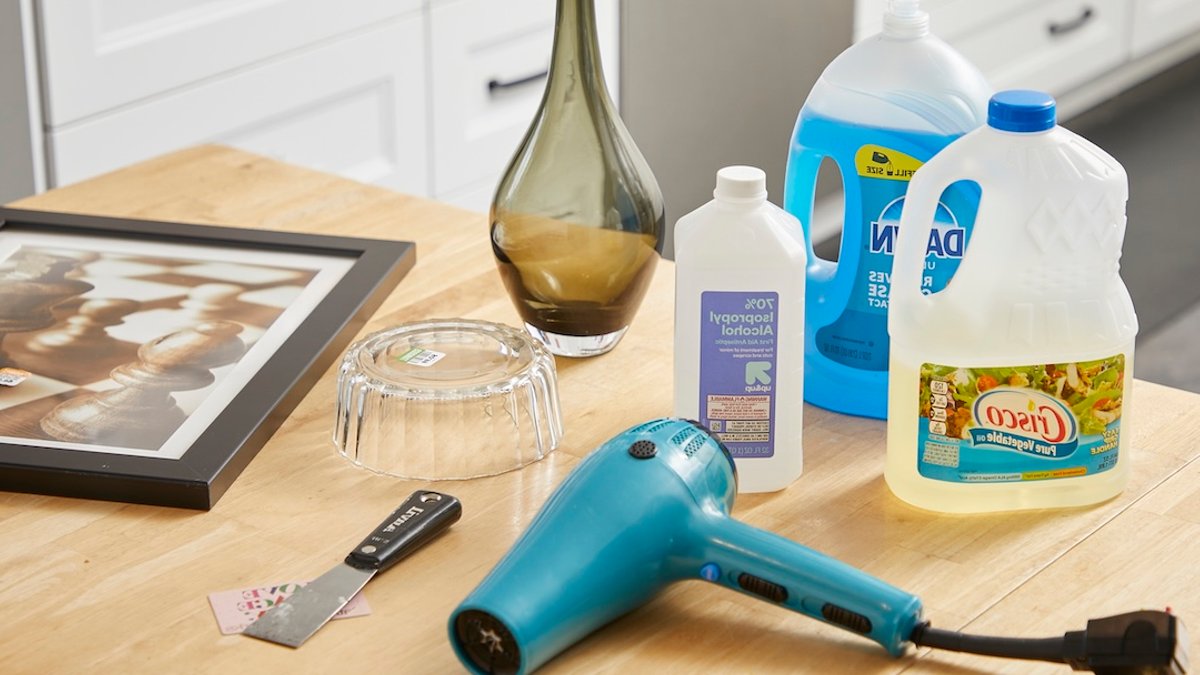
Removing stickers from glass surfaces can quickly become a frustrating task, especially when the adhesive clings stubbornly or leaves behind a filmy residue. The challenge arises from the composition of most sticker adhesives, which are designed to bond securely to smooth surfaces like glass. These adhesives often contain synthetic polymers that harden over time, making them resistant to simple peeling. Glass, while durable, is also prone to showing smudges, scratches, or leftover glue, which can detract from its clarity. Fortunately, the methods used to tackle this problem rely on principles of chemistry and physics—softening the adhesive, reducing its tackiness, or mechanically breaking its bond without harming the underlying material.
Soak in hot, soapy water
Hot water and soap work together to weaken the adhesive’s molecular structure. The heat causes the polymers in the glue to expand slightly, reducing their grip on the glass. Meanwhile, the soap acts as a surfactant, breaking down the adhesive’s surface tension and allowing water to penetrate more effectively. This dual action makes the sticker easier to lift, particularly if it has been in place for an extended period. The ideal water temperature should be hot enough to feel uncomfortable to the touch but not so hot that it risks thermal shock to the glass, which could occur with boiling water.
For items that cannot be fully submerged, such as a window or a large mirror, a soaked sponge can deliver the same effect. The sponge retains heat and moisture, creating a localized environment where the adhesive softens. After the soaking period, the sticker may peel away in one piece, though some edges might require gentle persuasion with a fingernail or a plastic tool. If fragments remain, repeating the process or switching to another method can help achieve a clean finish.
Apply heat with a hair dryer
Direct heat from a hair dryer targets the adhesive more aggressively than hot water. The warm air raises the temperature of the sticker and its glue, making the adhesive pliable. This method is particularly useful for stickers that have been exposed to sunlight or heat over time, as their adhesives may have hardened further. The key is to maintain a consistent distance from the glass—typically a few inches—to avoid overheating any single spot, which could cause uneven softening or, in rare cases, stress the glass.
Once the sticker feels warm to the touch, a plastic card, such as an old credit card or a gift card, can be used to lift the edge. Plastic is preferred over metal tools because it is less likely to scratch the glass. The sticker should peel away smoothly if the adhesive has been sufficiently softened. If residue remains, the card’s edge can be used to scrape it off, though care should be taken to avoid pressing too hard. Glass, while strong, can develop micro-scratches from abrasive contact, which may become visible under certain lighting conditions.
Use a lubricant or solvent
When heat and water prove insufficient, lubricants or solvents offer an alternative approach. WD-40, a multi-purpose lubricant, contains petroleum distillates that dissolve the adhesive’s chemical bonds. A light coating sprayed directly onto the sticker can break down the glue within seconds, allowing it to be wiped away with a cloth. Cooking oil, such as vegetable or olive oil, works similarly by penetrating the adhesive and reducing its stickiness. Unlike WD-40, oil is non-toxic and safe for surfaces that may come into contact with food or skin.
Rubbing alcohol, typically isopropyl alcohol with a concentration of 70% or higher, serves a different purpose. It evaporates quickly, which prevents it from leaving a greasy residue, but its primary function is to dissolve the adhesive’s polymers. When applied with a cotton ball or soft cloth, it can loosen even the most stubborn stickers. However, because alcohol evaporates rapidly, it may need to be reapplied several times for particularly resilient adhesives. After removal, any remaining residue can be cleaned with a damp cloth to restore the glass’s original clarity.
Each of these methods leverages a different scientific principle to tackle the same problem. Heat softens the adhesive, water and soap reduce its tackiness, while lubricants and solvents chemically alter its structure. The choice of method depends on the type of sticker, the duration it has been in place, and the tools available. For example, a fresh price tag on a new glass item may respond well to hot water alone, while an old label on a recycled bottle might require heat followed by a solvent. Combining methods can also enhance effectiveness—soaking in hot water first, then applying heat, can weaken the adhesive more thoroughly than either approach alone.
The goal is not only to remove the sticker but to do so without damaging the glass. Scratches, cloudy residues, or lingering adhesive can all detract from the surface’s appearance. By understanding how each method interacts with the adhesive, it becomes easier to select the right approach for the task at hand. For environments where stickers are frequently applied and removed, such as in crafting or recycling, maintaining proper ventilation can also help. In spaces like attics, where heat buildup can occur, adequate airflow prevents adhesives from softening unintentionally, which could make future removal more difficult.